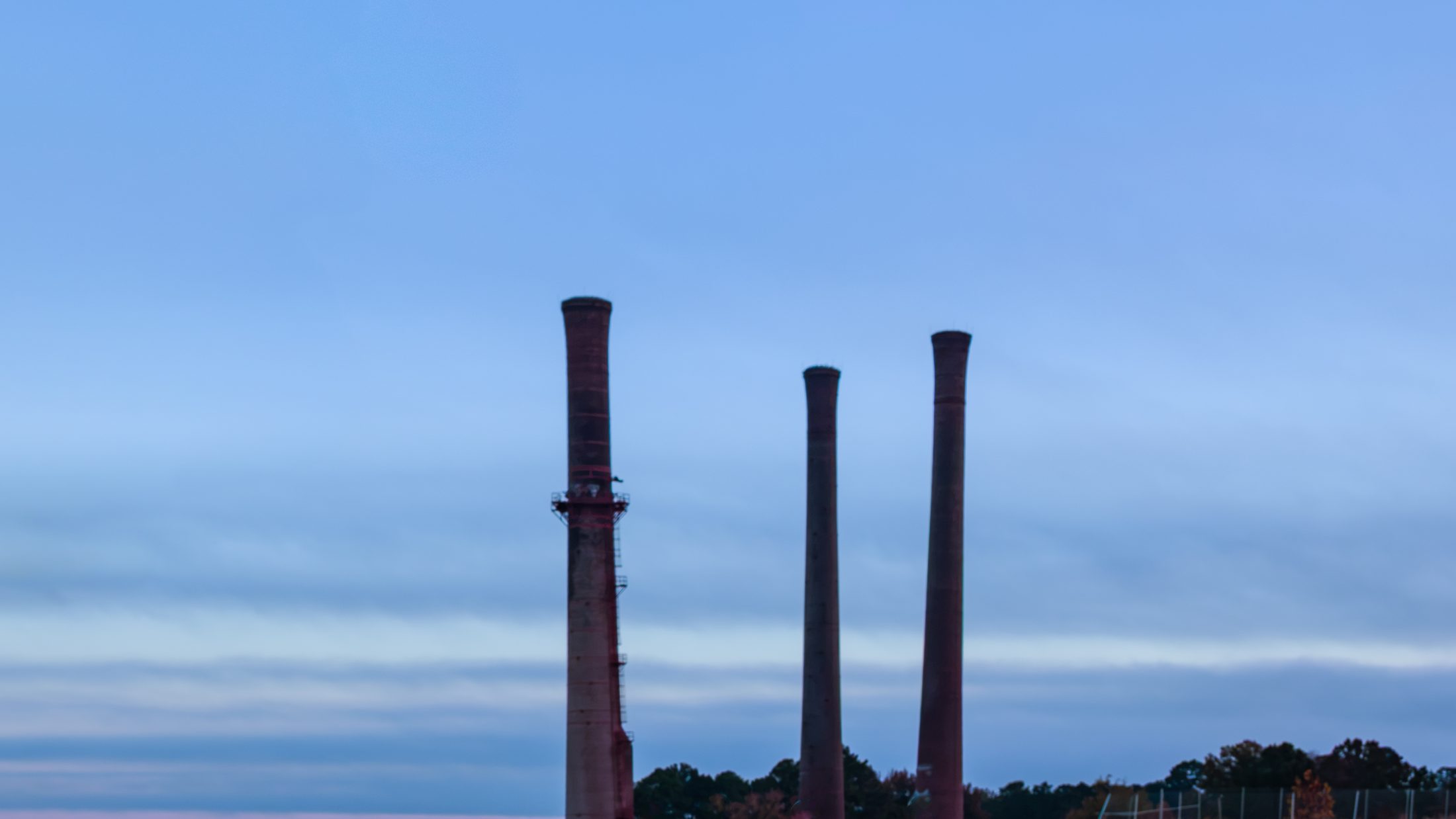
The Three Sisters
Three smokestacks, 220 feet tall, built to power a company town. They outlasted the mills, the workers, and the industry itself. This is their story.
They rise from the earth like sentinels of an older world. Three brick smokestacks, roughly 220 feet tall, standing in a row on an 85-acre site in southwest Danville, Virginia. For more than a century, they have watched over this city — through boom and bust, through war and strike, through silence and rebirth. They are the last visible remnants of what was once the largest single-unit textile mill in the world. The people of Danville call them the Three Sisters.
The Founding
On June 10, 1882, six men chartered the Riverside Cotton Mills with $75,000 in capital. Among them were three brothers — Robert A. Schoolfield, John H. Schoolfield, and James E. Schoolfield — along with Thomas Benton Fitzgerald (the company's first president), Dr. H.W. Cole, and Benjamin Franklin Jefferson.
They chose a site along the Dan River at Bridge and Main Streets in downtown Danville, harnessing the power of water through the Marotock Dam. The first mill was erected in 1883, and by 1898, seven mills lined the riverbank. Production soared: from 2 million yards of fabric in 1884 to 78 million yards by 1909.
But the downtown site, known as the Riverside Division, had limits. The Schoolfield brothers had a grander vision — one that would reshape the city and create monuments that would outlast them all.
The Schoolfield Division
By the turn of the century, Robert A. Schoolfield had risen to the presidency of the company. He envisioned something unprecedented: a purpose-built industrial campus, roughly 2.5 miles southwest of downtown, that would be not merely a mill but an entire town.
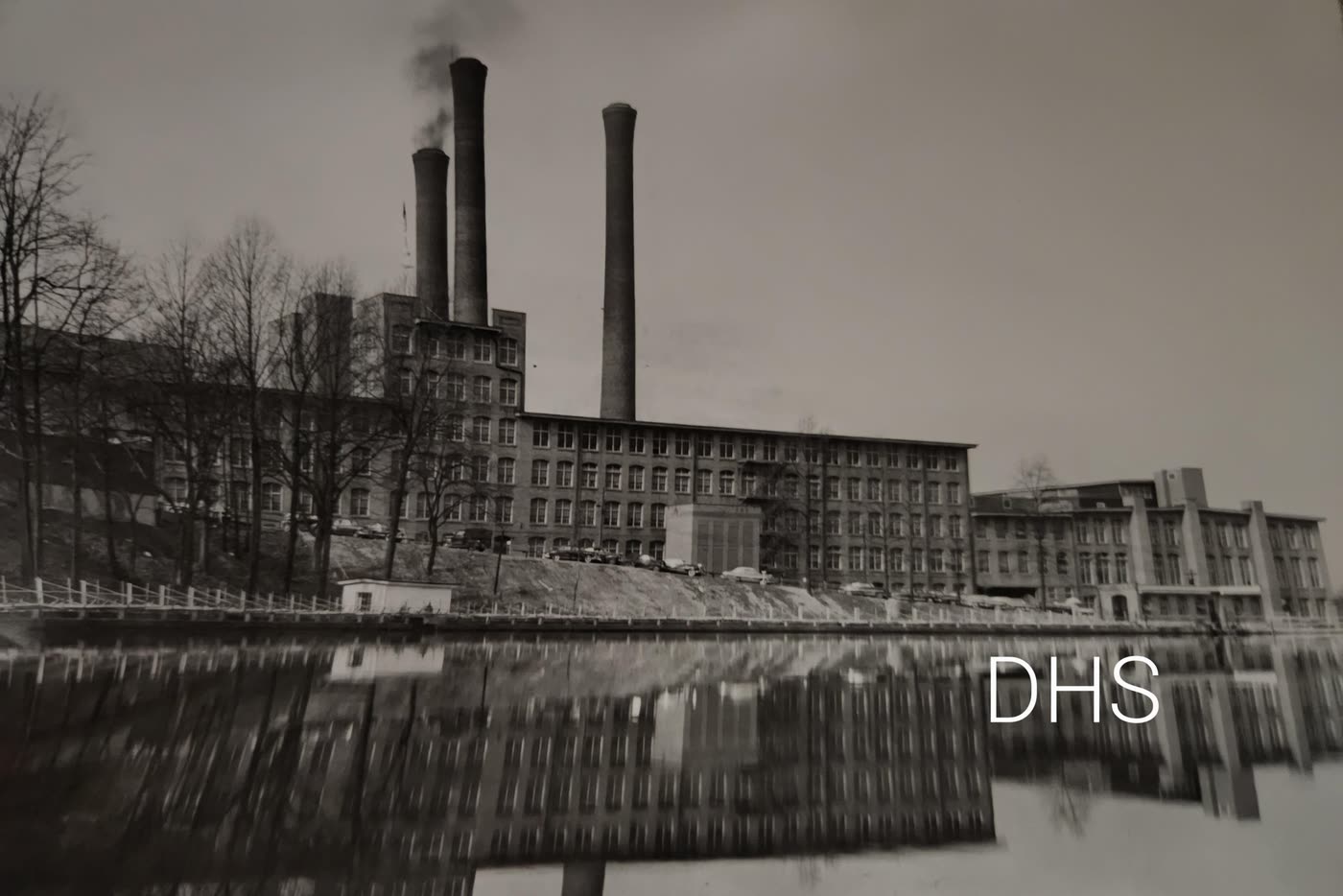
On July 22, 1903, the company contracted Lockwood Greene, the premier industrial architects of the era, to design the Schoolfield Division at 1100 West Main Street. The campus would be powered by two sources: the Schoolfield Dam, generating hydroelectric power, and a massive coal-fired powerhouse — served by three towering smokestacks, each roughly 220 feet tall.
Those three stacks, built in 1903–1904, were the heart of the operation. They vented the steam boilers that kept the looms thundering when the river alone could not. They were functional, industrial, and utterly dominant on the landscape. They still are.
Around the mill, an entire company town rose: more than 800 houses, schools, churches, a YMCA, a theatre, and a fire station. The town was named Schoolfield, after the three brothers. It was a self-contained world — workers lived, worshipped, shopped, and died within its borders.
The Workers
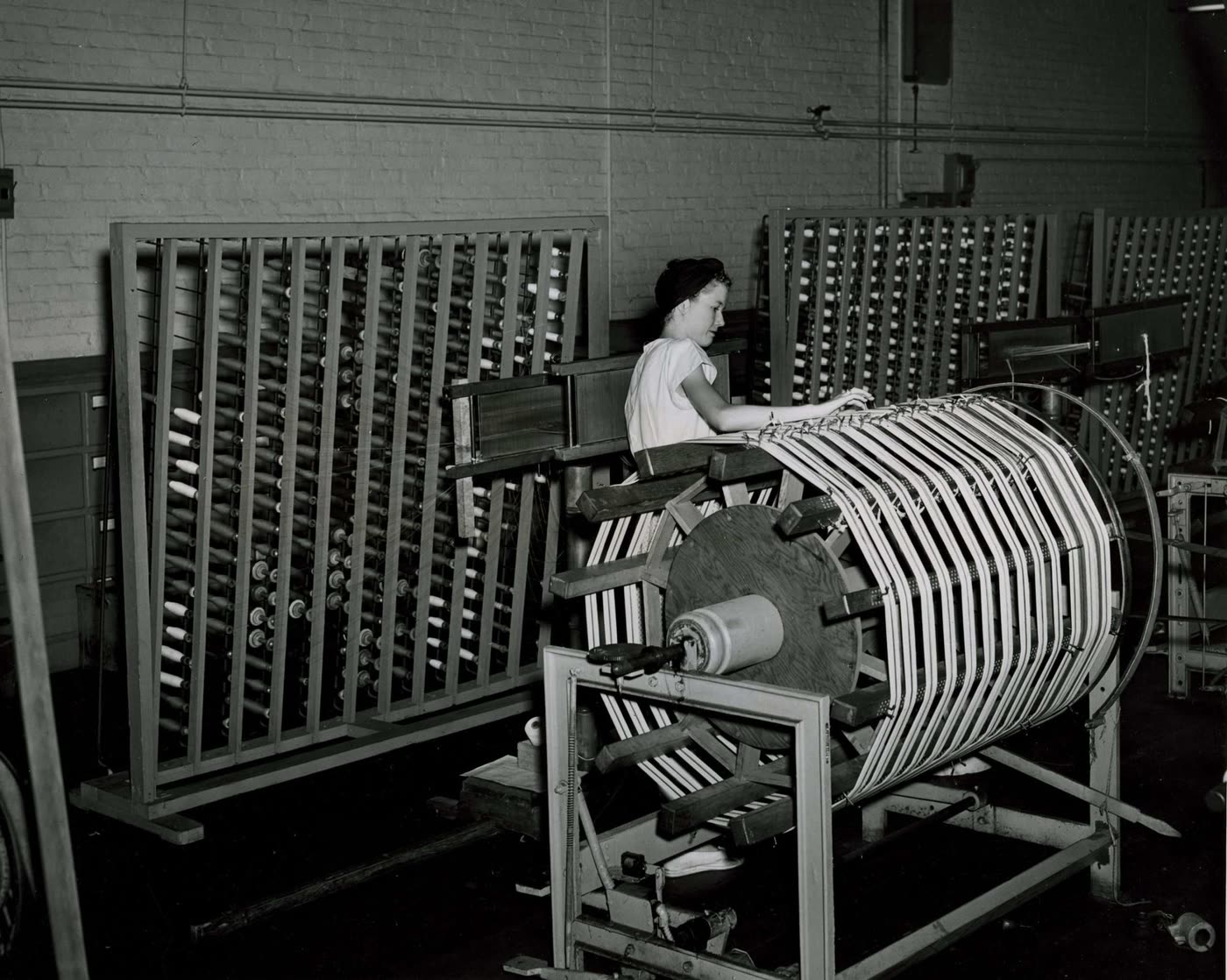
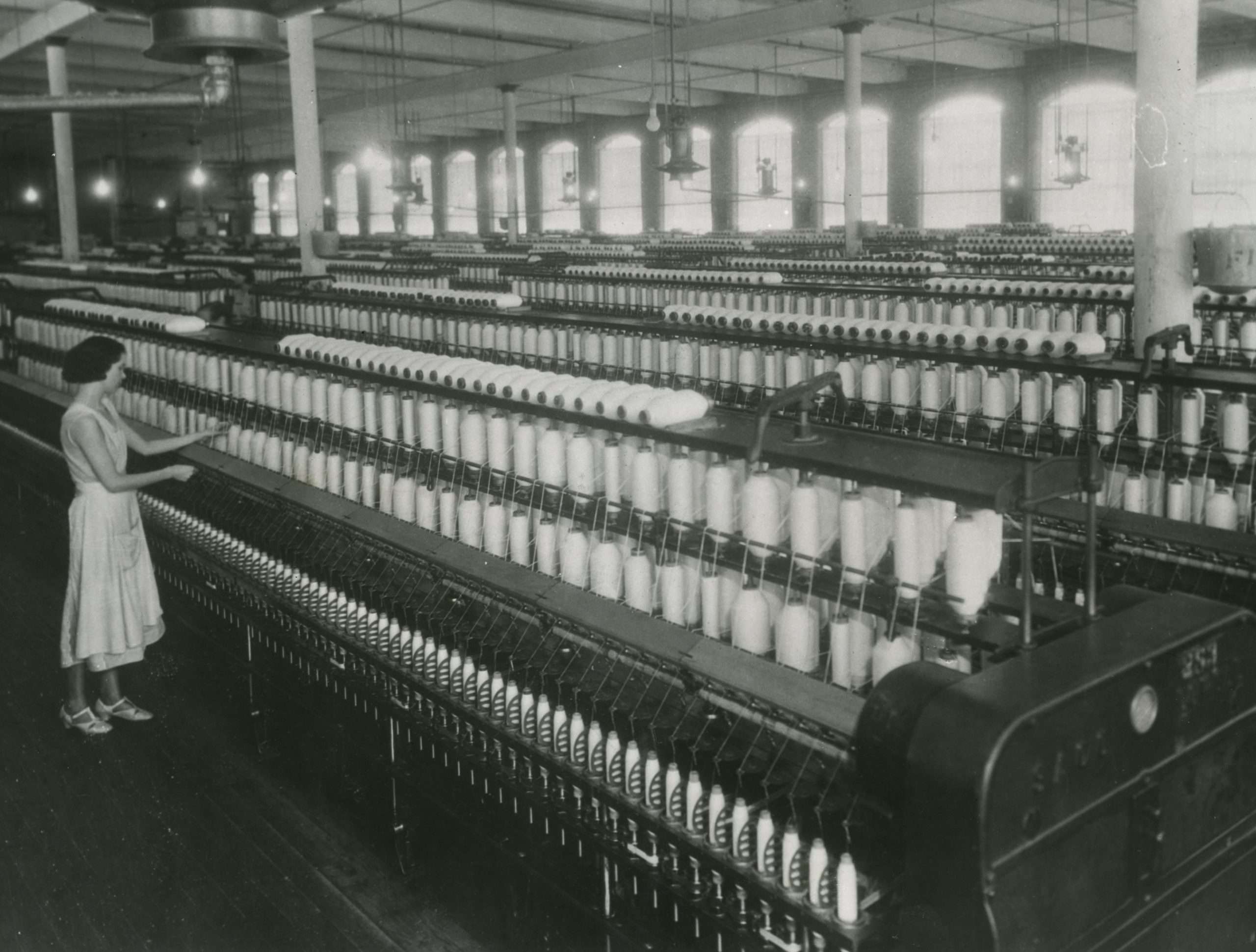
The mills ran on human labor — thousands of hands feeding cotton through carding machines, spinning frames, and looms. At its peak, the operation employed 14,000 people in a city of 40,000. Entire families worked the lines: fathers, mothers, and — in the early years — their children.
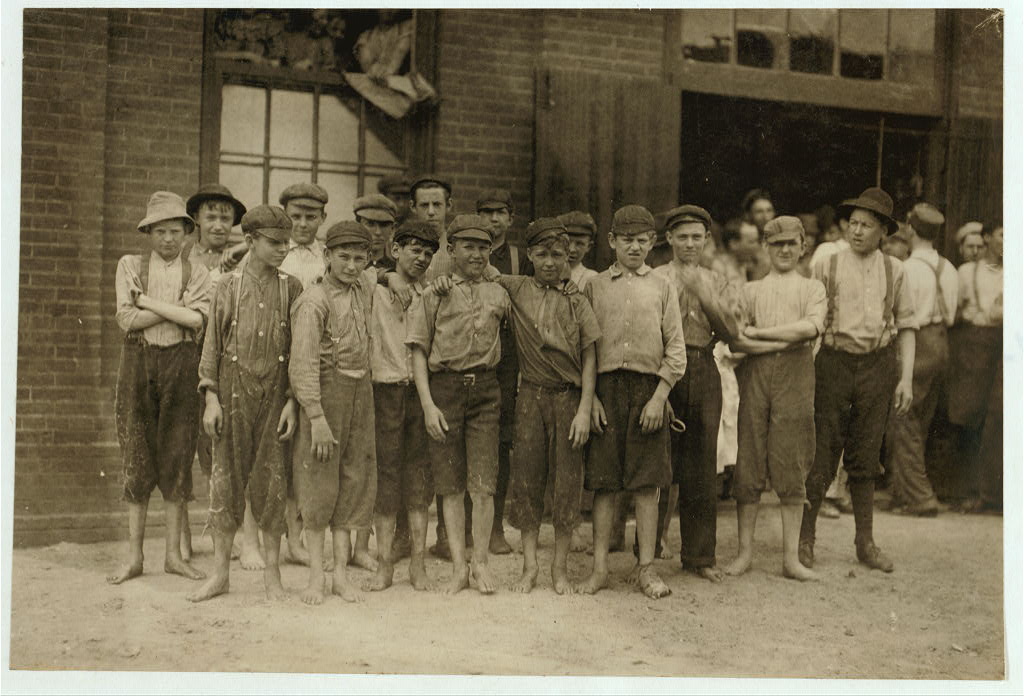
In 1911, photographer Lewis Hine visited both the Riverside and Schoolfield divisions on behalf of the National Child Labor Committee. His camera captured what the company ledgers did not: the faces of children — young doffers, dinner-toters, boys and girls who should have been in school — filing through the mill gates in the early morning darkness. These photographs became some of the most powerful documents of the American industrial age.
Yet the workers also built a community. In the 1920s, under President H.R. Fitzgerald, the company instituted an experiment in "Industrial Democracy" — a worker representation system modeled on the federal government. Workers elected representatives to a "House of Representatives" that met in the Schoolfield YMCA. The experiment gained national publicity as a progressive model for labor relations.
The Strike
The Great Depression hit Danville hard. Wages fell. Hours lengthened. Tension, simmering for years, finally boiled over.
On September 29, 1930, four thousand workers walked out under the banner of the United Textile Workers. It was one of the largest textile strikes in Virginia history. The company's response was swift and merciless: strikers were evicted from their company-owned homes in Schoolfield, thrown out of the very houses that stood in the shadow of the Three Sisters.
Violence followed. Houses were bombed. Cars overturned. The state sent in the National Guard. For months, the standoff continued through a bitter winter, families doubling up with relatives or sheltering in makeshift camps.
The strike ended on January 20, 1931, in total defeat for the workers. They returned to the mills with no concessions won, their union broken. Weeks later, H.R. Fitzgerald — the architect of Industrial Democracy — died, as if the last bridge between management and labor had collapsed with the strike itself.
The Three Sisters watched it all. They had no opinion. They simply kept burning.
The Largest Mill in the World
World War II transformed Danville's mills into an arsenal of fabric. The looms ran around the clock, producing cloth for uniforms, tents, parachutes, and countless other military applications. The company operated 12 mills and nearly 500,000 spindles, employing 14,000 workers in a city of 40,000. It was, by any measure, the largest single-unit textile mill in the world.
The Three Sisters poured steam 24 hours a day, seven days a week. The Schoolfield Dam hummed alongside the boilers, but it was the smokestacks that dominated the skyline, visible for miles — a signal to the entire Dan River Valley that the mills were running and Danville was working.
After the war, the company adapted. In 1946, it was renamed Dan River Mills, Inc. It developed innovative "Wrinkl-Shed" synthetic fabrics. In 1956, it acquired Iselin-Jefferson, adding 7,000 workers and bringing the total past 18,000. By 1979, annual sales reached $580 million — the peak profit year.
In a city of 40,000 people, the mill employed 14,000 of them. You didn't just work at Dan River — Dan River was the city.
Decline and Closure
The unraveling came in stages. Foreign competition, cheaper labor overseas, the slow erosion of America's textile industry — Danville was not immune to the forces reshaping the global economy.
In 1983, corporate raider Carl Icahn launched a hostile takeover attempt. To fight him off, the company restructured to become 70% employee-owned — an ironic echo of the Industrial Democracy experiment half a century earlier. The employees saved their company, but the reprieve was temporary.
By the early 2000s, the end was inevitable. On March 31, 2004, Dan River Inc. filed for Chapter 11 bankruptcy protection. GHCL, an Indian chemical firm, acquired the company for approximately $93 million. The final 500 jobs were moved overseas in 2006.
The looms stopped. The boilers went cold. The Three Sisters, for the first time in over a century, went silent. No smoke rose from their crowns. No vibration hummed through their brick walls. The 85-acre Schoolfield site, once alive with the rhythm of 14,000 workers, fell into an eerie stillness.
For years, the stacks simply stood — too massive to ignore, too expensive to demolish, too beloved to forget. They became something they had never been designed to be: monuments.
The Two Sites
To understand the Three Sisters, you must understand that Dan River Mills operated two distinct campuses in Danville — and their fates diverged dramatically.
Riverside Division (Downtown)
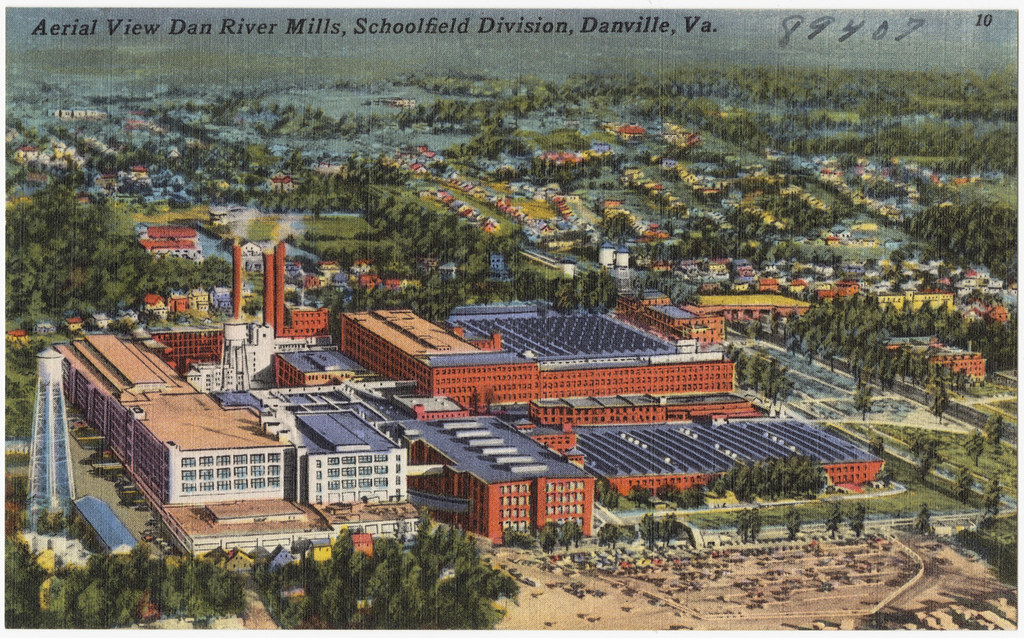
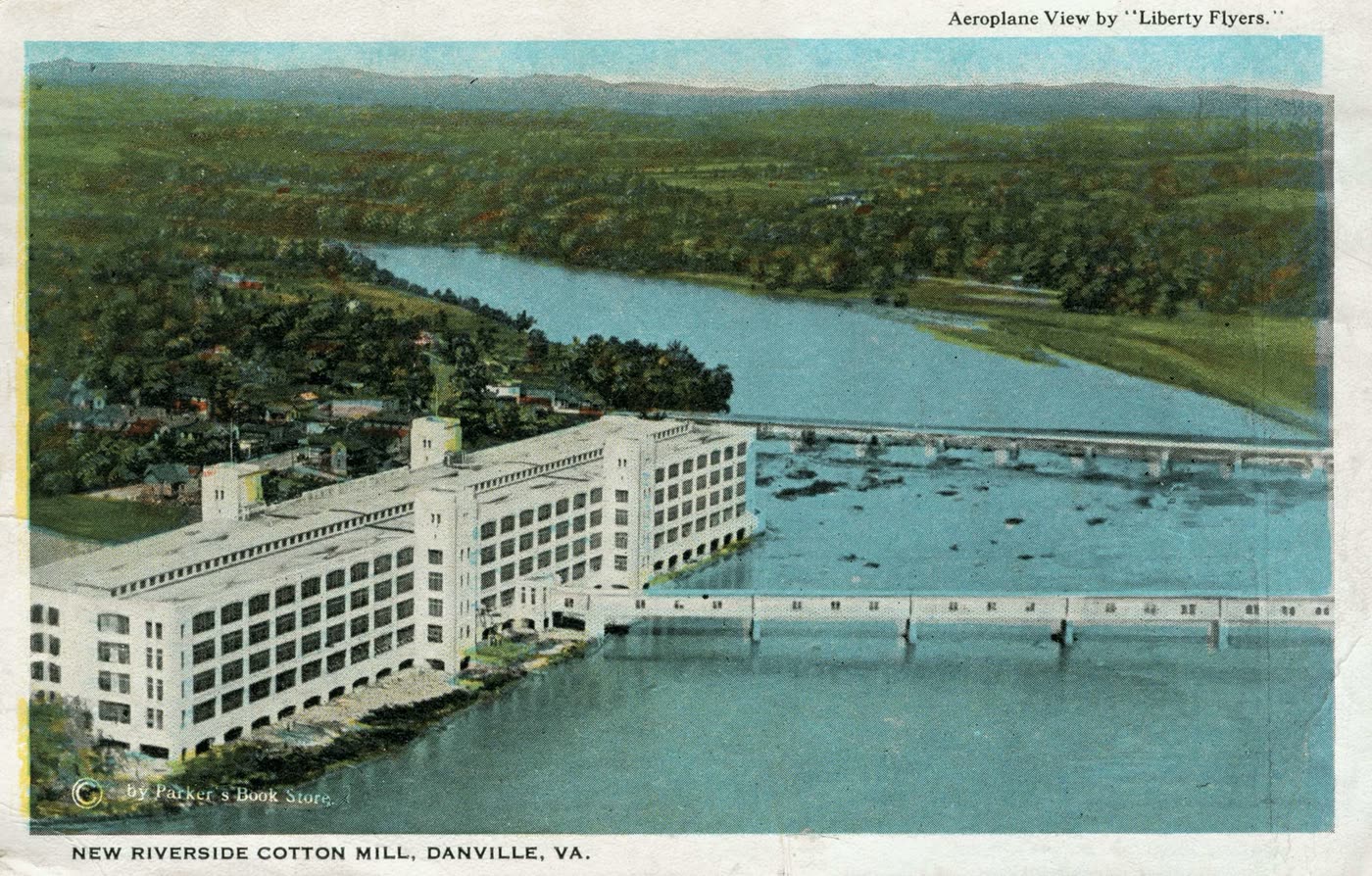
The original site along the Dan River at Bridge and Main Streets. Mills No. 1–7 were built between 1883 and 1898, plus Mill No. 8 "The White Mill" (1920), all powered by the Marotock Dam. This site had its own smokestacks — but they were demolished by implosion in November 2008. The Riverside Historic District was later delisted from the National Register in 2016. Today, Mill No. 8 has been redeveloped as "Dan River Falls" — a $110 million project with 190 apartments.
Schoolfield Division (Southwest)
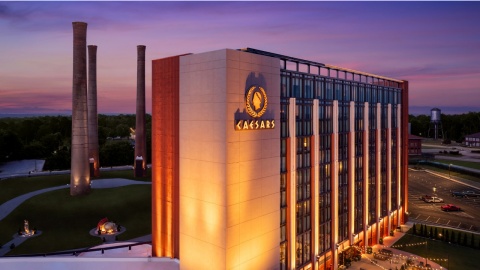
Built starting in 1903 at 1100 West Main Street, roughly 2.5 miles from the Riverside site. This is where the Three Sisters are — the three smokestacks of the Schoolfield powerhouse, built 1903–1904. The surrounding Schoolfield Historic District encompasses 512 acres and 1,005 contributing buildings, listed on the National Register on December 3, 2020. The Schoolfield Dam remains operational to this day, generating 4,500 kW. This 85-acre site became Caesars Virginia.
Caesars Virginia Rises
In 2020, Danville voters approved a casino referendum by a decisive 69% to 31%. The chosen site: the 85-acre Schoolfield Division — the same ground where the mills once thundered.
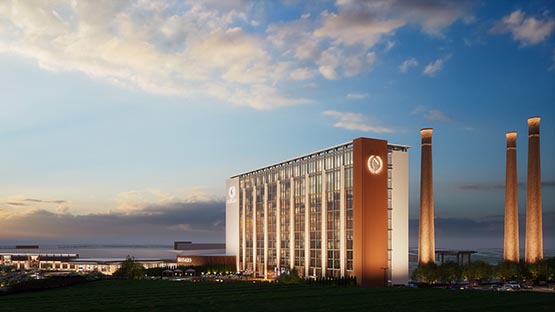
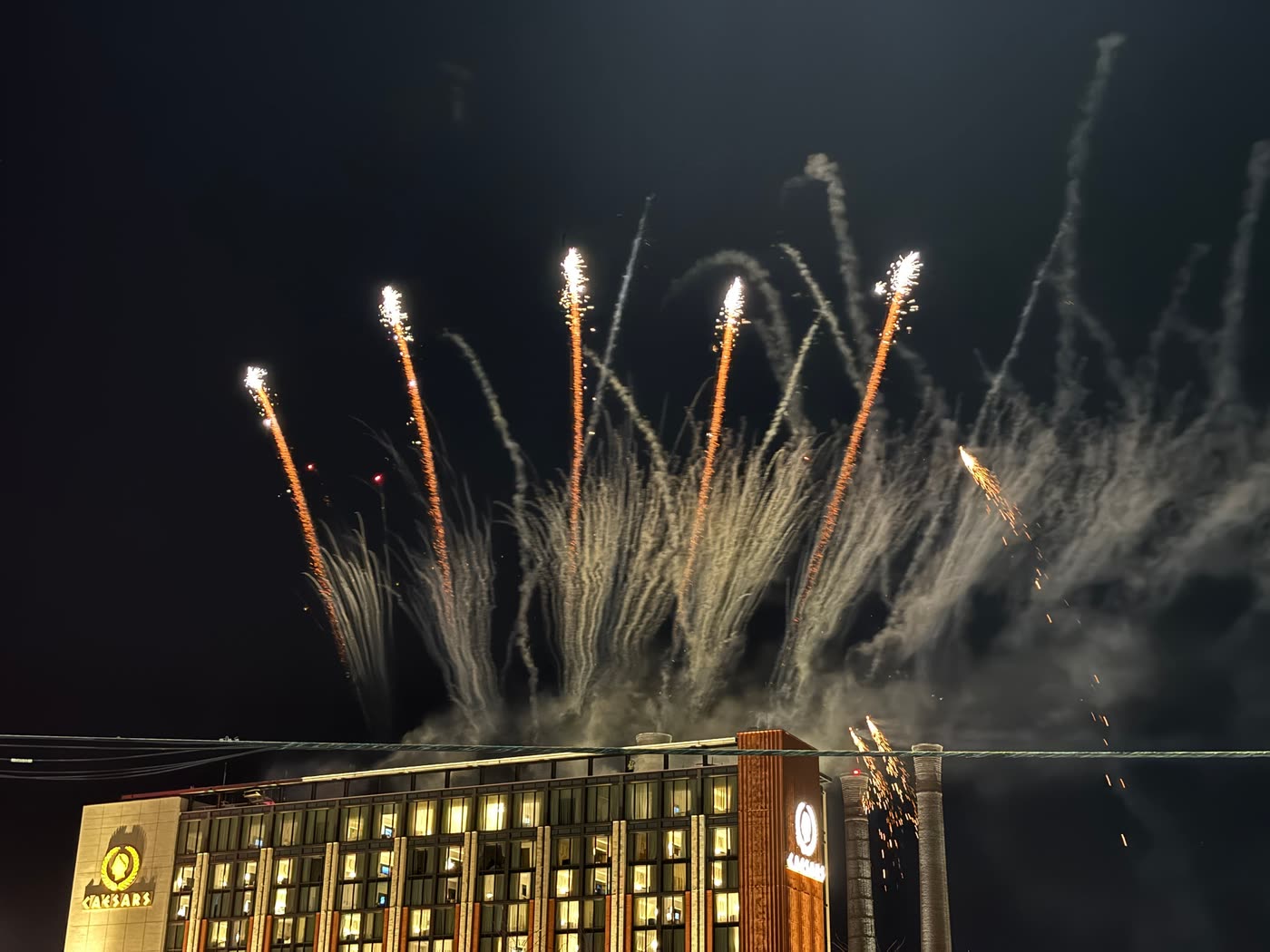
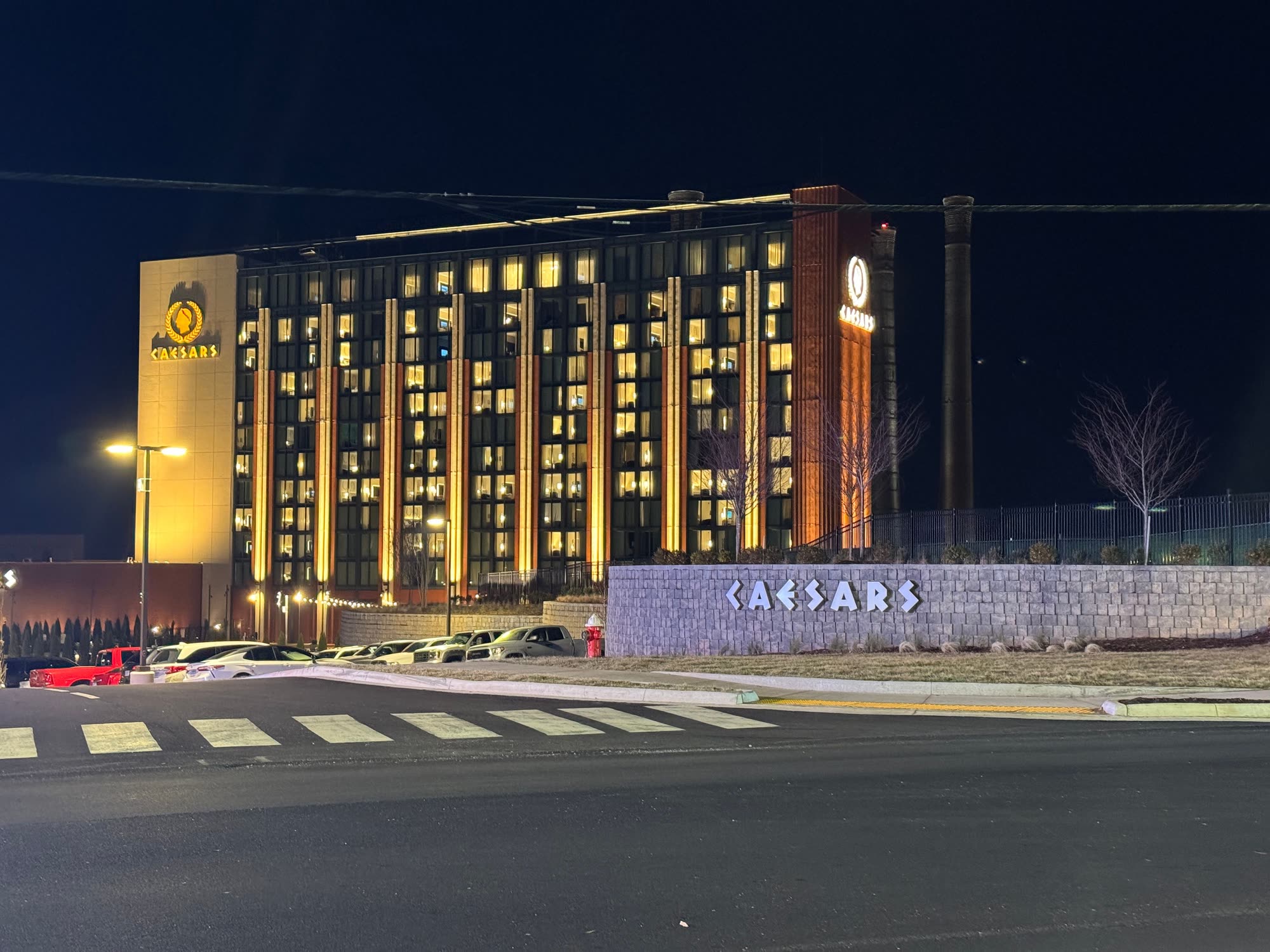
Caesars Virginia, a $750 million resort, opened on December 17, 2024. The centerpiece: an 18-story, 320-room hotel — deliberately built shorter than the Three Sisters smokestacks. The architects understood what the stacks meant.
The resort's design team, led by architect Dave Howryla, made the stacks the organizing principle of the entire campus. A restaurant named "Three Stacks" was created in their honor. Gordon Ramsay's Hell's Kitchen patio was oriented to frame views of them. The stacks were not demolished, not hidden, not ignored. They were celebrated.
The Marathon
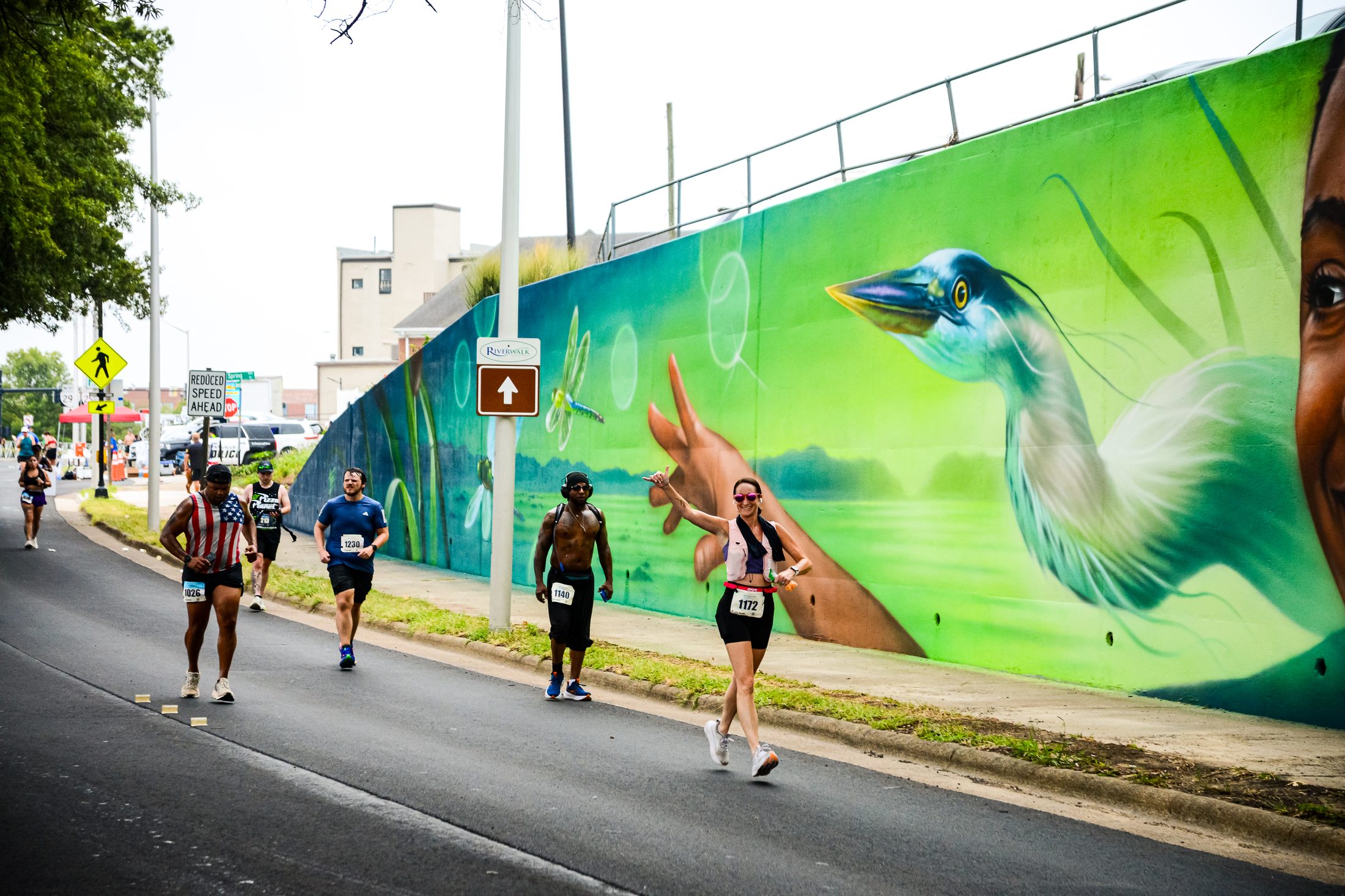
In 2025, a group of local organizers created the Three Sisters Marathon — a Boston Qualifying race through the streets of Danville, named for the smokestacks that have watched over this city for more than a century.
More than 900 runners answered the call in the inaugural year. They ran past the mill sites, through the historic neighborhoods, along the river that once powered the looms. The ground that once shook with the rhythm of spinning frames now thundered with footsteps.
The marathon did something no one quite expected: it gave the Three Sisters a new purpose. They were no longer relics of an industry that abandoned Danville. They were landmarks on a course, symbols of endurance, proof that some things are built to last.
The smokestacks don't produce steam anymore. But on race morning, when the sun catches their brick faces and the field surges past their base — they are, once again, at the center of something alive.
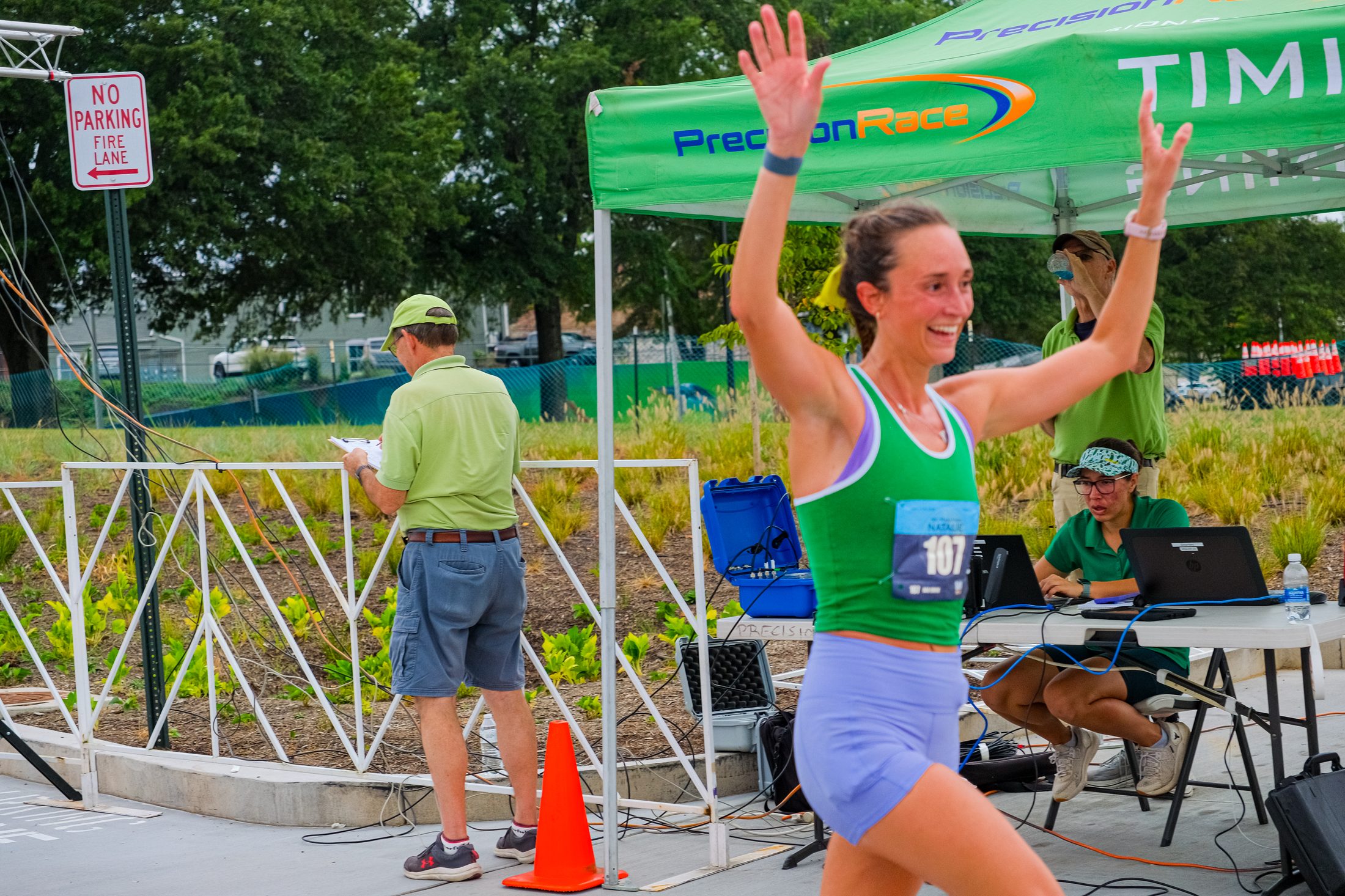
Run Where History Lives
The Three Sisters have stood for over 120 years. They've survived two world wars, a depression, a strike, a bankruptcy, and a demolition that claimed their downtown counterparts. Now they watch over a marathon. Add your footsteps to their story.